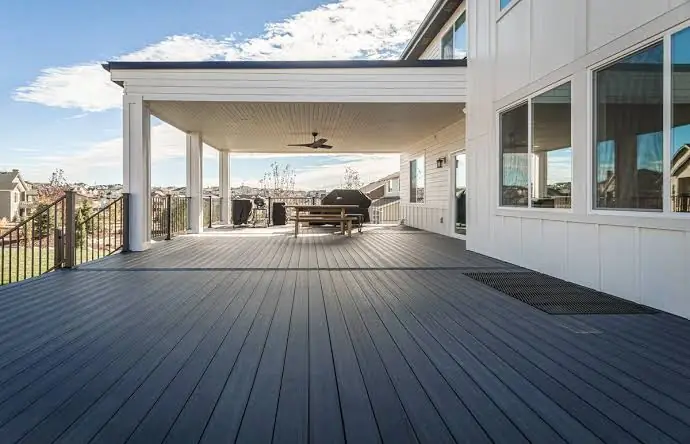
Composite Deck Building Cost: 2026 Price Breakdown & Guide
A realistic composite deck building cost hits between $35 and $75 per square foot installed in 2026, a reality I watched surprise a homeowner in Denver who budgeted $12,000 for a 400-square-foot backyard build and received quotes starting at $21,500. Composite boards outlast pressure-treated pine without annual staining, yet framing lumber, hidden fasteners, and aluminum railings quietly double the base material ticket. Understanding how builders price materials versus structural labor saves you from sticker shock once excavation begins.
Most mid-sized composite projects land between $14,000 and $30,000 total for a ground-level or low-elevation platform. Let us break down exact material tiers, framing upgrades, regional labor rates, and smart ways to trim expenses without sacrificing structural safety.
Composite Deck Building Cost — Overview
Composite decking blends recycled wood fibers with high-density polyethylene or PVC polymers to resist rot, splintering, and insect damage. Unlike raw lumber that costs $4 to $7 per square foot for boards alone, capped composite planks run $8 to $18 per square foot before a single joist is cut. Builders calculate final quotes by combining board tier, substructure complexity, railing footage, and local permit fees.
Key facts to know first
Entry-level versus capped polymer boards
Scalloped entry-level boards like Trex Enhance Basics or TimberTech Prime cost roughly $8 to $10 per square foot for materials and feature hollowed undersides to reduce weight and resin use. Full-profile capped PVC boards like TimberTech Vintage or Trex Transcend Lineage reach $14 to $18 per square foot, offering superior scratch resistance and cooler surface temperatures under direct summer sun. Choosing solid-profile boards also allows cleaner picture-frame borders without exposing hollow grooves at stair treads.
Substructure framing and joist spacing rules
Standard wood decking allows 16-inch on-center joist spacing, whereas most composite manufacturers mandate 12-inch spacing to prevent warm-weather sagging. Tighter framing adds roughly 25% more pressure-treated Southern yellow pine joists, galvanized joist hangers, and butyl flashing tape to your lumber bill. Ground-level decks built close to grade cost $35 to $48 per square foot total, while elevated second-story platforms with deep concrete footings push past $65 per square foot.
What most people get wrong
Assuming deck boards represent the biggest expense
Many homeowners price composite planks at a big-box store, multiply by their square footage, and expect labor to match the material receipt. In reality, composite surface boards account for only 30% to 35% of the finished project price. Structural framing, helical piers or concrete sonotubes, composite-sleeved posts, and skilled carpentry make up the remaining two-thirds of your invoice.
Overlooking railing and stair labor multipliers
Deck stairs require custom-cut stringers, closed risers, extra lighting wiring, and graspable handrails that take far longer to build than flat floor framing. Adding a single 10-step staircase typically adds $1,800 to $3,200 to your contract price. Upgrading from basic composite rails to black aluminum balusters or cable infill jumps railing costs from $45 per linear foot to over $115 per linear foot.
Ignoring long-term exterior finish savings
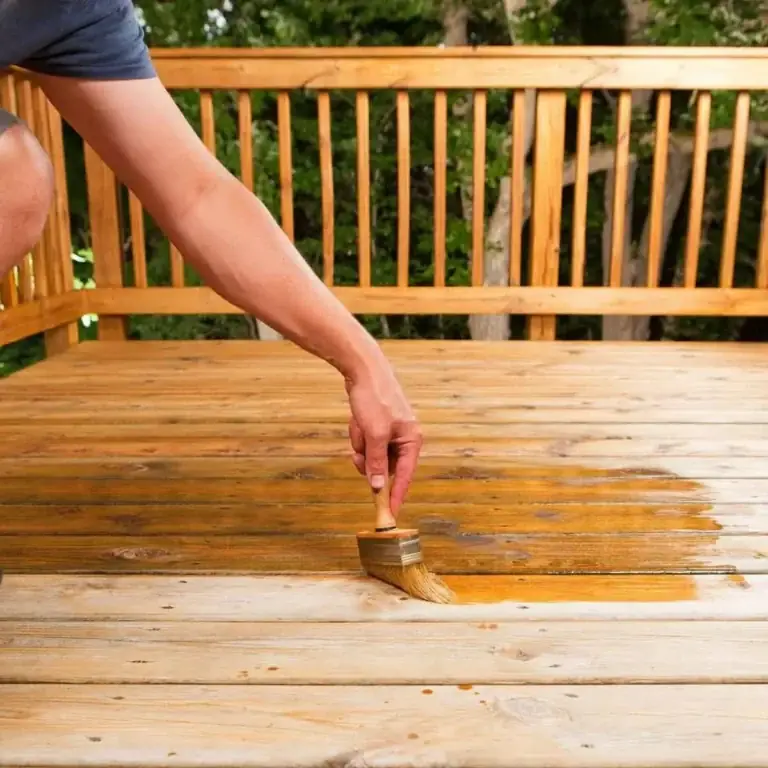
Upfront composite quotes look steep next to cedar or pressure-treated pine, yet wood decks demand power washing and sealing every two to three years. Homeowners comparing low-maintenance upgrades across their entire property often check ppg exterior paint reviews and evaluate exterior paint alternatives alongside composite decking to eliminate recurring weekend maintenance bills. Over a 15-year span, skipping $800 biennial staining cycles recovers most of the initial composite price premium.
Detailed Material, Labor, and Add-On Breakdown
Price ranges by deck size and structural tier
Typical 2026 project budgets by square footage
-
Small 12×16 platform (192 sq. ft.): $7,200 to $13,500 installed using entry-level scalloped composite and basic vinyl-wrapped posts.
-
Medium 16×20 family deck (320 sq. ft.): $12,800 to $22,400 installed with mid-tier capped composite, hidden fasteners, and one set of stairs.
-
Large 20×24 multi-zone deck (480 sq. ft.): $21,000 to $36,000+ installed featuring picture-frame borders, aluminum railings, and low-voltage post cap lighting.
Labor rates and hidden site charges
Experienced deck contractors charge $20 to $40 per square foot for labor in 2026, depending on soil conditions and municipal inspection rules. Rocky soil or high frost lines in northern states require 42-inch to 48-inch concrete footings, adding $150 to $300 per pier. Demolition and haul-away of an existing rotted wood deck typically adds $1,000 to $2,500 to the estimate.
Essential hardware and finishing upgrades
Hidden fasteners versus color-matched face screws
Grooved composite boards use stainless steel hidden clips tucked between planks, creating a clean, fastener-free walking surface for roughly $1.50 to $2.25 per square foot extra. Solid-edge boards used on stairs and perimeter picture frames require color-matched epoxy-coated screws with matching composite plugs. Never use standard drywall or bright steel deck screws, because natural expansion snaps weak screw heads within two seasons.
Joist tape, fascia boards, and drainage systems
Applying self-adhering butyl joist tape over every pressure-treated joist and ledger board costs around $250 for an average deck and prevents premature frame rot around fastener holes. Color-matched 12-inch composite fascia boards hide raw framing lumber around the perimeter for $10 to $15 per linear foot. If you plan to build a dry patio underneath an elevated deck, under-deck drainage troughs add $15 to $25 per square foot.
How to Lower Your Composite Deck Building Cost
Smart design choices that cut waste
Standardizing dimensions to match board lengths
Manufacturers mill composite planks in 12-foot, 16-foot, and 20-foot lengths. Designing a 15-foot-wide deck forces crews to buy 16-foot boards and toss one foot of expensive material on every single run. Sizing your layout to 12, 16, or 20 feet minimizes off-cut waste and trims material orders by 8% to 12%.
Simplifying shapes and railing perimeters
Octagonal corners, curved inlays, and diagonal 45-degree board patterns require tighter 12-inch or 9-inch joist spacing plus hours of precision miter cuts. Sticking to a clean rectangle with a single contrasting picture-frame border gives you a custom architectural look without paying triple labor hours. Keeping low ground-level decks under 30 inches above grade also eliminates mandatory building-code guardrails in most jurisdictions.
Planning whole-home exterior upgrades together
Bundling backyard projects for better contractor pricing
Scheduling your deck build alongside siding or trim updates lets contractors share dumpster rentals, material deliveries, and scaffolding setups. Many homeowners researching low-upkeep house painting alternatives coordinate their exterior cladding and composite deck timelines in the same season so housewrap and ledger flashing integrate seamlessly. According to the International Code Council (ICC) International Residential Code Section R507, exterior wood-plastic composite deck boards must meet ASTM D7032 span ratings and attach to properly flashed, corrosion-resistant ledger connections to pass structural inspection.
Timing your material purchase
Lumberyards and composite distributors routinely raise prices in March and April when spring construction demand spikes. Locking in material quotes during late autumn or mid-winter often saves 10% to 15% on board packages and secures top spring installation dates on a builder’s calendar.
Frequently Asked Questions
What is the average composite deck building cost for a 16×20 deck?
A standard 16×20 composite deck (320 square feet) costs between $12,800 and $22,400 installed in 2026. Entry-level scalloped boards with simple wood railings sit near the lower end, while capped PVC planks, aluminum railings, and tall stairs push totals toward the upper range.
Is composite decking cheaper than wood over 10 years?
Composite decking costs roughly twice as much upfront as pressure-treated pine, yet it breaks even around year eight to ten. Wood decks require $600 to $1,000 in cleaning, sanding, and staining every two years, whereas composite needs only occasional soap and water rinsing.
Can you put composite deck boards over an existing wood frame?
Yes, you can resurface an existing frame only if the joists sit 12 to 16 inches on center, show zero rot, and meet current building code ledger attachment rules. Resurfacing saves roughly $12 to $20 per square foot in framing labor, though contractors must still apply butyl joist tape before laying new planks.
How much do railings add to a composite deck quote?
Expect railings to add $45 to $120 per linear foot installed, depending on whether you select basic composite rails, black aluminum pickets, or stainless steel cable systems. A 300-square-foot elevated deck with 50 linear feet of railing easily adds $2,500 to $6,000 just for perimeter guards.
Final Advice Before Requesting Quotes
Evaluating your composite deck building cost accurately starts with separating board tier prices from structural framing, footings, and railing footage. Stick to standard 12-foot or 16-foot deck dimensions, insist on butyl joist tape over pressure-treated framing, and verify ASTM D7032 span ratings on your written contract. Sketch your exact backyard dimensions today and request itemized quotes from at least three licensed local deck builders so you can compare framing specs line by line.