Flat Roof Replacement Cost Per Square Foot: Membrane Pricing
Checking the flat roof replacement cost per square foot saves you from sticker shock when a low-slope garage or mid-century extension starts leaking. Most residential and light-commercial flat roof projects cost between $5.00 and $13.50 per square foot installed, depending on membrane thickness, insulation boards, and tear-off complexity. Three years ago, I priced a 950-square-foot flat roof tear-off over a rear addition, where two roofing bids differed by $3,900 simply because one estimator included tapered polyiso insulation while the other planned to lay rubber directly over damp boards.
Flat Roof Replacement Cost Per Square Foot by Material
EPDM, TPO, modified bitumen, and built-up rates
Low-slope membranes rely on continuous waterproof sheets rather than overlapping shingles that shed water by gravity. Material thickness, measured in mils, directly controls both upfront square-foot pricing and puncture resistance against foot traffic or falling branches.
-
EPDM Rubber Membrane (45 to 60 mil): $5.00 to $9.50 per square foot installed, offering 25 to 35 years of reliable cold-weather flexibility.
-
TPO Thermoplastic Single-Ply (60 to 80 mil): $6.00 to $11.50 per square foot installed, featuring heat-welded seams and reflective white surfaces.
-
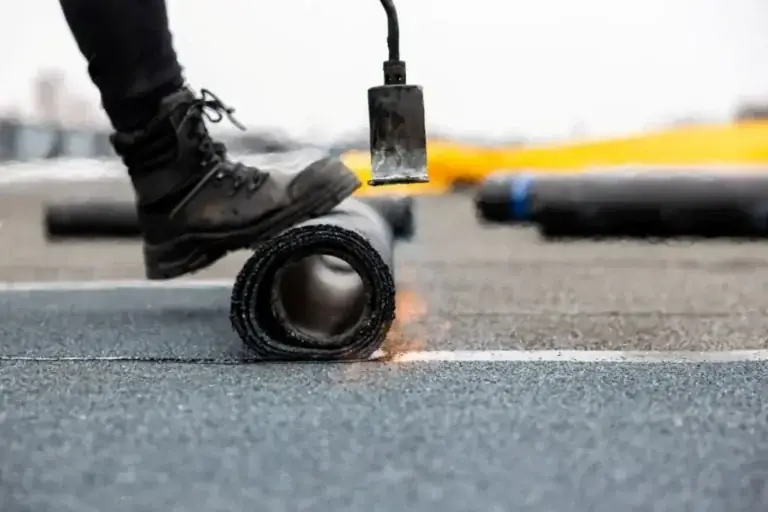
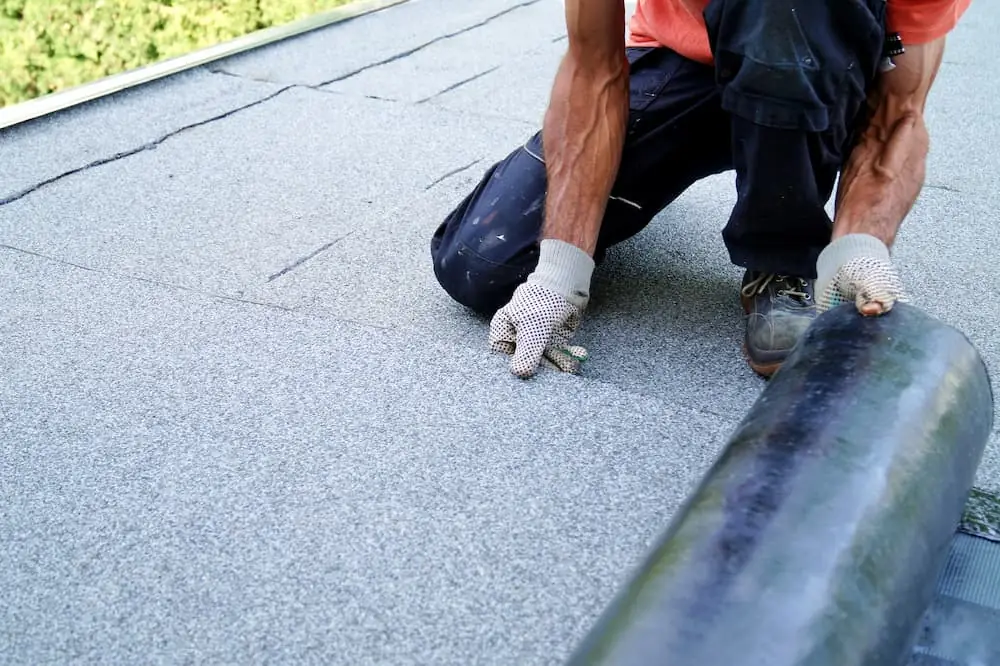
Modified Bitumen (Torch-Down or Self-Adhered): $5.50 to $10.00 per square foot installed, built from reinforced asphalt layers suited for heavy foot traffic.
-
PVC Membrane (60 to 80 mil): $7.50 to $13.50 per square foot installed, resisting grease, ponding water, and chemical exposure for 30+ years.
-
Built-Up Tar and Gravel (BUR): $6.50 to $12.00 per square foot installed, using multiple felt plies topped with mineral aggregate.
Which membranes give the best value per foot
White TPO for hot southern climates
Reflective white TPO sheets bounce up to 80% of solar heat away from your living space during July and August. According to the U.S. Department of Energy (DOE), cool reflective roofs can lower peak roof surface temperatures by more than 50°F, trimming summer air-conditioning bills enough to offset higher installation prices.
Black EPDM for freeze-thaw northern zones
Thick 60-mil black EPDM absorbs winter sunlight to melt snow quickly and handles extreme temperature swings without cracking at the seams. Homeowners in Minnesota, Michigan, and New England often favor EPDM because large 10-foot-wide sheets minimize field seams where ice could pry edges apart.
Why Flat Roofs Are Priced Differently Than Pitched
Labor methods unique to low-slope work
Heat-welded seams versus adhesive bonding
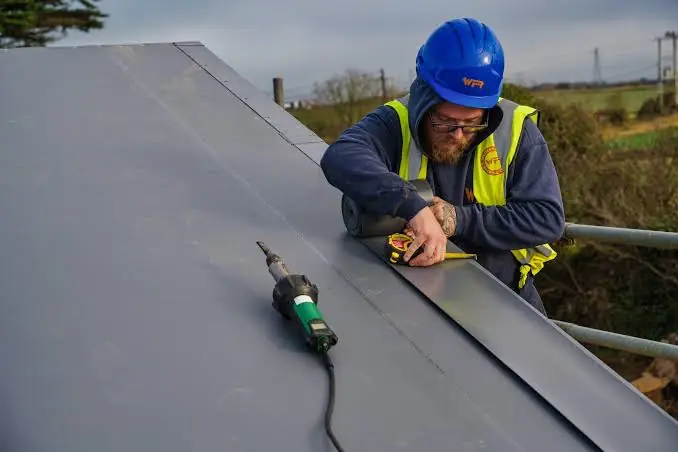
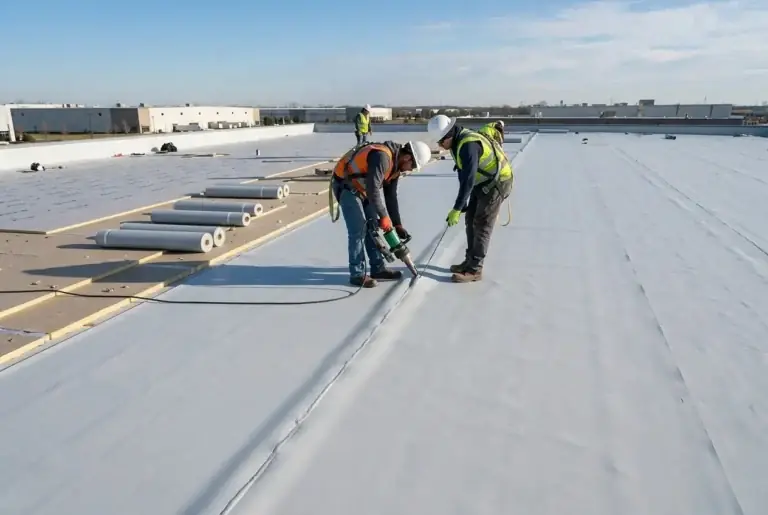
TPO and PVC installations require specialized hot-air robotic welders and handheld seam probes to fuse overlapping sheets into one monolithic skin. Meanwhile, fully adhered EPDM jobs demand solvent-based bonding adhesives rolled onto both the substrate and the rubber sheet, driving labor hours higher than standard shingle nailing.
Comparing low-slope rates against pitched roofs
Shingle crews work faster using pneumatic coil nailers on sloped roofs, whereas flat roof mechanics spend hours detailing parapet walls, scuppers, and pipe penetrations. Reviewing roof replacement cost per sq ft for pitched homes shows why low-slope membranes carry higher labor markups per square foot despite having no steep-pitch safety harnesses.
Insulation and drainage requirements
Tapered polyiso board for positive drainage
No flat roof is truly dead-level, because standing water voids almost every manufacturer warranty within 48 hours of rainfall. Roofers install tapered polyisocyanurate foam boards beneath the membrane to create a gentle 1/4-inch-per-foot slope toward scuppers or internal drains, adding $1.75 to $3.25 per square foot.
Thermal R-value energy code upgrades
Modern building codes frequently require continuous rigid insulation above the roof deck whenever you strip an existing flat roof down to bare wood. Adding two layers of 2-inch polyiso insulation raises your roof replacement price per square foot, yet it stops conditioned indoor air from escaping through thin ceiling joists.
Extra Costs Beyond the Base Per-Foot Rate
Tear-off, decking repairs, and edge detailing
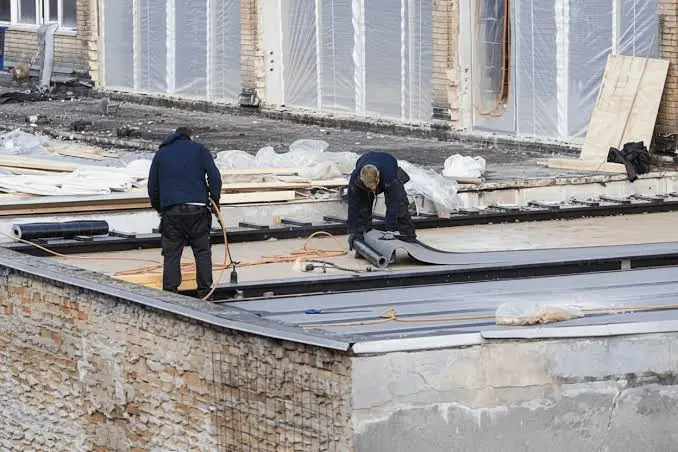
Stripping saturated insulation and old tar layers
Tearing off an old tar-and-gravel roof creates immense dumpster weight and dust compared to peeling back a single rubber sheet. Wet fiberboard insulation must be removed completely before new adhesives can bond, adding $1.25 to $2.50 per square foot to your demolition total.
Coping caps, gravel stops, and scupper boxes
Perimeter metal edge detailing prevents high winds from peeling flat membranes upward like a tin can lid. Custom-fabricated 24-gauge Kynar-coated steel fascia edges and welded scupper boxes typically add $12 to $22 per linear foot around your roof perimeter.
Permits and disposal fees to expect
Municipal roofing permits and core cut tests
City building departments charge $150 to $450 for low-slope reroofing permits and often require an inspector to verify fastening patterns before final sign-off. On older buildings with unknown layers, contractors sometimes perform a small core cut test for $150 to check moisture levels trapped underneath.
Heavy debris haul-away and landfill surcharges
Asphalt built-up roofs and wet wood fiberboard weigh several tons even on a modest 1,000-square-foot garage. Contractors factor extra roll-off dumpster swaps into your estimate whenever tear-off debris exceeds standard municipal weight limits.
Getting Fair Quotes for a Flat Roof Project
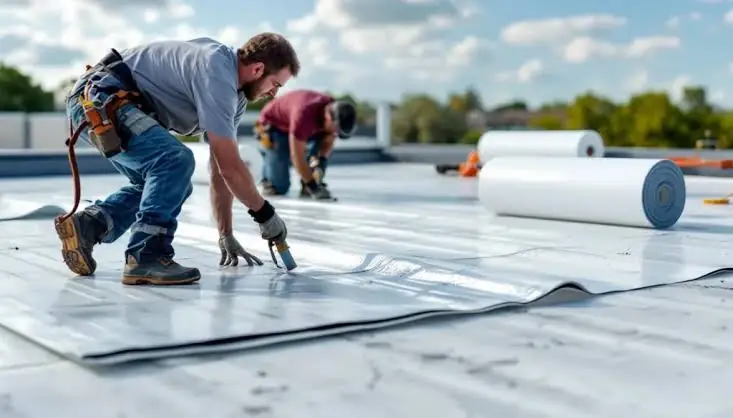
What a detailed flat roof estimate should show
Membrane mil thickness and attachment method
Every written proposal should specify exact membrane thickness, such as 60-mil reinforced TPO, alongside whether sheets will be mechanically fastened or fully adhered. Mechanically attached roofs cost roughly $0.75 less per square foot, though fully adhered systems resist wind flutter and noise far better over bedrooms.
Flashing details around skylights and HVAC curbs
Water rarely leaks through the flat field of a new membrane; instead, failures happen at skylight curbs, brick chimneys, and vent pipes. Confirm that your quote includes prefabricated corner boots and clad-metal termination bars sealed with commercial-grade polyurethane caulk.
When a coating beats a full replacement
Elastomeric silicone and acrylic roof coatings
If your existing EPDM or modified bitumen membrane has dry, intact insulation underneath with only minor surface wear, a high-solids silicone coating costs just $2.50 to $4.50 per square foot. Fluid-applied coatings create a seamless waterproof barrier and extend roof life by 10 to 15 years without dumpster fees.
Spotting localized seam splits before coating
Coating over soaked insulation traps moisture inside your roof assembly and causes blisters within one summer. Checking roof repair cost per square foot near me helps you price targeted seam patches first, ensuring your deck stays completely dry before any restoration coating goes down.
Frequently Asked Questions
What is the average flat roof replacement cost per square foot for a 1,000 sq ft roof?
A full 1,000-square-foot flat roof replacement typically costs between $5,500 and $11,500 using 60-mil EPDM or TPO membrane. Adding tapered insulation boards or tearing off multiple layers of old tar and gravel pushes total costs toward the upper end of that range.
Which material gives the lowest flat roof replacement cost per square foot?
45-mil EPDM rubber and rolled modified bitumen usually offer the lowest upfront cost at $5.00 to $8.00 per square foot installed. Upgrading to thicker 60-mil TPO or EPDM adds roughly $1.00 to $1.50 per square foot while extending service life by five to ten years.
Can a new flat roof membrane be installed over an existing roof?
Local building codes generally allow one recover layer over an existing flat roof if core moisture tests prove the underlying insulation is completely dry. If two layers already exist or trapped water has softened the decking, a full tear-off is required.
How long does a flat roof replacement take to install?
Most residential flat roofs between 800 and 1,500 square feet take two to three days from tear-off to final seam inspection. Rain delays can extend that timeline because adhesives and heat welders require bone-dry surfaces to bond properly.
Request Your Itemized Flat Roof Quotes
Knowing the real flat roof replacement cost per square foot keeps contractors honest about membrane thickness, tapered insulation, and perimeter metal edging. Reach out to three commercial-grade flat roof specialists this week, request itemized written quotes with moisture-scan verification, and lock in dry-weather installation dates before leaks damage your interior ceilings.